What Is Reprographic Printing and When Do Businesses Still Need It?

What Is Reprographic Printing and When Do Businesses Still Need It?
In an era dominated by digital workflows, cloud storage, and instant file sharing, it might seem like physical document reproduction has become obsolete. Yet reprographic printing continues to play a vital and often irreplaceable role across a wide range of industries. From construction sites to legal offices, from engineering firms to educational institutions, the need to produce high-quality, large-format, or high-volume reproductions of technical documents remains very much alive. Understanding what reprographic printing means — and recognizing when your business genuinely needs it — can save you time, money, and serious headaches down the road.
What Is Reprographic Printing?
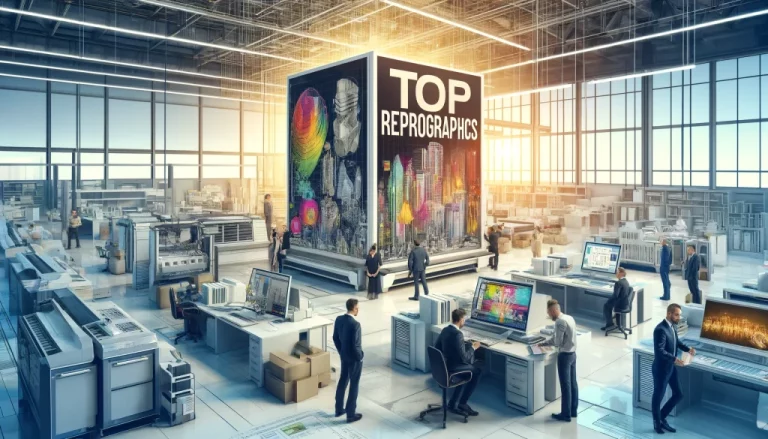
The term “reprographics” refers to the process of reproducing graphic materials, documents, drawings, and other visual content through a variety of printing and copying technologies. Unlike standard office printing, reprographic printing typically involves large-format output, high-volume duplication, or the faithful reproduction of technical drawings that require precise detail and accuracy.
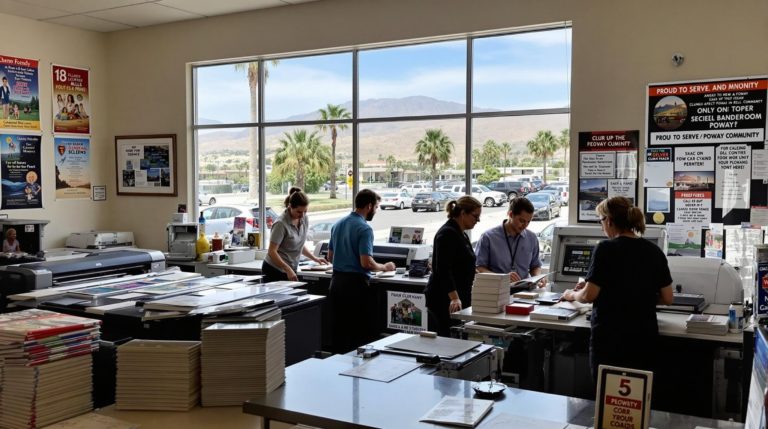
Historically, reprographics relied on processes like blueprinting (hence the term “blueprints”) and diazo printing to copy architectural and engineering drawings. Today, the field has evolved considerably. Modern reprographic services use wide-format inkjet printers, laser copiers, and digital plotters to produce everything from construction documents to exhibition graphics with remarkable fidelity.
For a deeper dive into the technical history and current definition, this resource on reprographic printing offers a comprehensive breakdown of the processes and technologies involved.
Key Characteristics That Set Reprographic Printing Apart
Not all printing is reprographic printing. Several defining characteristics distinguish reprographic services from standard print jobs:
- Large-format output: Reprographic printing routinely handles documents sized A1, A0, and beyond — far exceeding what a standard office printer can produce.
- High accuracy and detail: Technical drawings, blueprints, and engineering plans require crisp lines, consistent scaling, and legible annotations at full size.
- Volume reproduction: Reprographic services are optimized for producing multiple identical copies of the same document efficiently and cost-effectively.
- Specialized media: Reprographic output often uses bond paper, vellum, polyester film, or other substrates suited to durability and longevity on job sites or in archives.
- Document management integration: Many reprographic providers offer scanning, archiving, and digital distribution alongside physical print services.
Industries That Rely Heavily on Reprographic Printing
Architecture and Construction
This is perhaps the most well-known use case for reprographic printing. Architects, structural engineers, and general contractors need large-format printed plans distributed to multiple stakeholders on every project. Digital files are useful for design and review, but on a busy construction site, a worker cannot always stop to pull up a PDF on a tablet. Printed drawings are waterproof, tear-resistant when laminated, and easily referenced without a power source or screen glare.
Construction projects routinely require dozens of copies of full plan sets distributed to subcontractors, municipal reviewers, and project owners. Reprographic printing services handle this at scale, often offering same-day or next-day turnaround to meet tight project timelines.
Engineering and Manufacturing
Mechanical engineers, civil engineers, and product designers frequently work with highly detailed technical drawings that must be reproduced at exact scale. A drawing printed even slightly off-scale can lead to costly fabrication errors. Reprographic printing services use calibrated equipment to ensure dimensional accuracy across every copy produced.
Legal and Compliance Sectors
Law firms, government agencies, and compliance departments often need to produce large quantities of identical documents for court filings, regulatory submissions, or official records. In many jurisdictions, certain documents must still be submitted in physical form, making high-volume document reproduction a continuing necessity.
Education and Research
Universities, research institutions, and training organizations use reprographic printing for course materials, research posters, academic presentations, and large-scale visual aids. A conference poster printed at A0 size needs the sharp resolution that only proper reprographic equipment can reliably deliver.
Retail and Real Estate
Floor plans, property layouts, site maps, and promotional display graphics are all common reprographic outputs in real estate and retail planning. Presenting a development proposal with crisp, oversized printed materials still carries a professional weight that purely digital presentations sometimes lack in formal settings.
When Does Your Business Actually Need Reprographic Printing?
Identifying the right moment to use a reprographic service — rather than relying on in-house printing or digital distribution alone — comes down to a few practical questions:
- Do you need documents larger than A3? If yes, standard office equipment simply will not cut it.
- Is dimensional accuracy critical? Scaled technical drawings must be printed on equipment that maintains consistent output dimensions.
- Are you distributing to multiple parties who need physical copies? Reprographic services are built for efficient volume reproduction.
- Is durability a concern? Documents used on construction sites, in the field, or stored for long periods benefit from reprographic-grade materials and printing methods.
- Do you have a deadline? Professional reprographic providers offer rapid turnaround that on-demand office printing simply cannot match at scale.
The Digital-Physical Balance in Modern Reprographics
One of the most important shifts in reprographic services over the past decade has been the integration of digital workflows with physical output. Today’s leading reprographic providers do not just print — they scan legacy drawings into digital archives, manage document version control, and distribute files electronically while also fulfilling physical print orders. This hybrid approach allows businesses to maintain the efficiency of digital document management while still producing the physical outputs that active projects and regulatory requirements demand.
Scanning and Archiving Old Documents
Many businesses hold warehouses full of legacy technical drawings on paper or film. Reprographic services can scan these at high resolution, creating digital archives that preserve the documents and make them searchable and shareable. The physical documents can then be stored more compactly or securely reproduced on demand when needed.
Print-on-Demand for Project Documentation
Rather than maintaining massive print inventories that quickly become outdated when drawings are revised, modern reprographic workflows allow teams to print exactly the quantity needed, precisely when it is needed, always from the most current file version. This reduces waste, lowers storage costs, and eliminates the confusion that arises when outdated printed drawings remain in circulation.
Choosing the Right Reprographic Partner
Not all print shops offer true reprographic services. When evaluating a provider, look for the following capabilities:
- Wide-format printing capacity (at least A0 / 36-inch wide format)
- Experience with technical and architectural drawings
- Colour management and calibration capabilities
- Fast turnaround options, including same-day service
- Secure file handling for sensitive project documents
- Scanning and digital archiving services
- Multiple media options including bond, vellum, and film
Conclusion: Reprographic Printing Is Not Going Away
Despite the relentless advance of digital tools, reprographic printing occupies a durable niche in business operations wherever physical documents at scale are required. The construction industry depends on it. Engineering firms rely on it. Legal departments, educators, and retailers all find themselves reaching for reprographic services when digital delivery simply is not enough.
Understanding what reprographic printing is, how it differs from standard printing, and when your specific business needs it puts you in a far better position to manage project documentation effectively, maintain compliance, and deliver professional results. Whether you are printing a single oversized site plan or reproducing hundreds of full construction drawing sets, partnering with a capable reprographic provider ensures your documents are accurate, durable, and ready when your team needs them most.